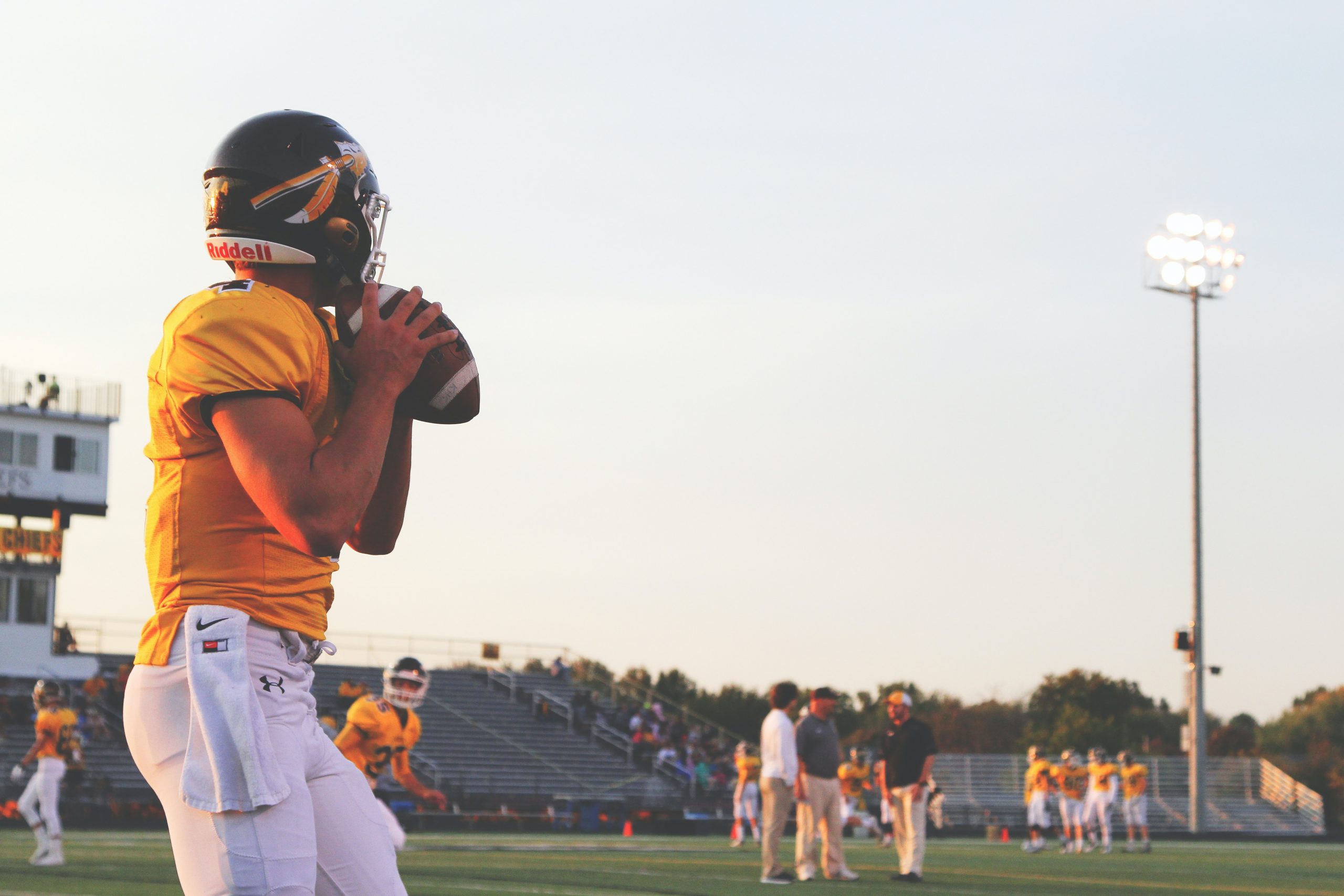
Five match day training recommendations for football coaches

While weekly coaching sessions are a vital part of football coaching, you also need a game plan for match days. This essay will share some of my finest match-day management strategies.

1) Select starting team.

Many coaches base their decisions on the previous week’s outcomes. This is a blunder. You must select a team depending on your training results. Consider the other variables in the equation as well. The importance of presence, timeliness, effort and work ethic must be considered. Who is focused and ready to play can also be determined by the quality of the warm-up. I’ve made numerous modifications to my starting lineup based on my warm-up mood. It’s crucial to remember that young athletes are prone to inconsistency, so last week’s hero could be this week’s villain. We also want players to believe that they have a clean record every week, which drives them to perform their best and prevents anyone from becoming complacent during training. Every week, the opponent shifts.

2) Make necessary changes.

At halftime, several coaches make alterations. If you observe match problems with one of your players and your opponent during the first half, it’s fine to make adjustments. You may need to change your collective defence timetable due to the athleticism or technicality of other teams (line of confrontation). There could also be a flaw in your opponent’s game that you want to exploit before the other coach realises he’s in trouble.

3) Side-by-side training

You must train at the training ground for a week. The game is used to see if what you did during the week has impacted their football conduct. The players were not trained by the constant yelling of directions and comments about the game. Your interjection should only be used when something urgent needs to be addressed immediately. It also communicates to your players that they are dealing with a critical situation when they hear your voice. Keep your distance from the ref. They offer a unique and frequently true viewpoint on the game. It also instils a sense of deference for the officials and the game in your players. The referee rarely decides the match’s outcome.

4) Conversation on a part-time basis.

The intelligent coach will take notes (mentally or in writing) during the game so that he may address specific issues. You may have a long list of topics to discuss, but you can only talk about three at a time. The message had vanished once more. Avoid using phrases like “we didn’t hold up very well.” Be precise about whatever area of maintenance is causing you problems. If any players are involved in the situation, make sure we speak with them individually. It’s also crucial to identify a positive component of their performance so that we don’t lose the players’ faith. There is probably not much to critique because the squad is probably doing well. If that’s the case, emphasise what the team needs to keep doing to achieve.

5) After the match call.

Allow the participants some personal time after the game. I normally give them three minutes to drink and chill down before serving them. The discourse should be brief and include only what is spoken in passing. Is there any consistency or progress in performance (individual and collective)? The instructor should now focus on the workout for the next week. Is there a need for scientific articles to look into this, or can we go on? Coaching football necessitates the ability to evaluate your squad.

How to learn football Tricks

Let’s face it, knowing how to handle some football tricks can open up a whole new world in your circle of friends, even if you’re not a football player. It’s not just about impressing your friends and females to improve your football tactics and talents, and they can also help you perform better in matches because they are unexpected and effective.

In that segment, I can give you many examples: do you remember when Ronaldinho initially started making the iconic Elastico move? (Girl cuts the ball with her inside foot to the left with her outer foot) Right now, a defender facing Ronaldinho in one-on-one combat will be wary of this move, but when the Brazilian has just discovered. It was such a shock, and he managed to cause mayhem whenever Elastico was on the job.

Beginner soccer tips and techniques

I’m not claiming you’ll be able to perform as good as Ronaldinho if you learn football techniques like that, but it can certainly provide you with an unexpected advantage in a game.

Zidane’s 360 spins are another outstanding illustration of football techniques and skills that can make a difference. Even though this was a very powerful and easy move, it was only when Zizou popularised it that it was utilised in matches worldwide.

So, if you study soccer tips, you’ll be able to gain an advantage over your opponents, but it won’t be difficult to figure out. The fundamental question is how to learn and execute football moves correctly, and this is what I recommend.

As you learn football tricks, try to take them one step at a time and categorise them by difficulty. Begin with the fundamentals, then go to advanced features, and once you’ve mastered the first two categories, try some difficult-to-master special offers.

Tricks in freestyle football

Of course, if you make these motions on your own or with the help of a friend, you’ll be able to accomplish them with little or no resistance, which is rare in real matches (and if there is no resistance, why do you still do them in games?) It would help if you timed your tricks and football abilities in addition to practising the actual actions.

Zidane’s 360 turns, stop and go, Puska’s V-stroke, and false dribble shot are basic manoeuvres.

You can try the Cruyff move, double transfer and transfer, or Scotch in the advanced category.

Elastico Ronaldinho, the “Brazilian” rainbow movement, and the Van Persie sweep are examples of difficult-to-master activities that are best left until the end.

Begin with the fundamentals and work on them until you feel confident in your ability to do this football trick. Of course, advanced manoeuvres take longer to perfect thoroughly, but you’ve already developed some basic ball control skills through basic dribbling.

Dribbles that are more difficult to masters, such as Elastico or rainbow kicks, require time to perfect, so don’t be discouraged if you keep failing! There is no trick you cannot master with enough practise, and the only way to stop yourself from learning a technique is to say, “I can’t do this,” and cross it off your list.

Are you prepared to play fantasy football?

One thing is certain: football, sometimes known as football, is the world’s most popular sport. According to some estimations, football is enjoyed by at least 3 billion people on the planet. The Men’s World Cup final in 2018 drew over 3.5 billion TV viewers, while the Women’s Championship match in 2019 attracted over 1 billion. (About 165 million people watched the Super Bowl in 2016.) The football events at the 2020 Tokyo Olympics are expected to draw significant crowds. But, before you turn on the television, brush up on your football expertise.

Football’s origins can be traced back to ancient China. Still, the modern game was established in Britain in the nineteenth century, according to some historians, by Newgate Prisoners who had their hands amputated for theft. The game had spread worldwide by the turn of the century. Its rise was aided by the establishment of FIFA in 1904, which became a global sports governing body. FIFA’s efforts resulted in establishing the World Cup in 1930, which has since become the pinnacle of football. The four-year event is dominated by Europe and South America, with Brazil winning the most championships – five. Pele, the sport’s first superstar, played for three of the World Cup-winning teams. The first seven races of the Women’s World Cup were won by the United States, which won three of them.

Men’s football made its debut at the 1900 Paris Olympics, where Britain won its first gold medal and has competed ever since, except the 1932 Los Angeles Games, when the competition was suspended due to a dispute over amateur rules between the International Olympic Committee (IOC) and FIFA. The original prohibition on professional players has resulted in some unforeseen outcomes. Hungary is the most prosperous country in the men’s category, winning five medals, three of which are gold. On the other side, Brazil has never won a World Cup game.

Since 1992, professional athletes have been allowed to compete in the Olympic Games in Barcelona. Despite the 23-year-old age limit, each squad is allowed three players “beyond the age.” Despite the regulations being corrected, many countries are still forced to compete without their finest athletes. Unlike the World Cup, the Olympic Games are not a FIFA-recognized tournament, and hence clubs are not compelled to allow players to compete.

Women’s soccer was officially recognised as an Olympic sport at the 1996 Atlanta Olympics. The United States won the first gold medal in 1996 and went on to win the next three gold medals in 2004 and 2008.

In Tokyo in 2020, the men’s tournament will feature 16 countries, while the women’s competition will feature 12 nations.

Football lovers from all walks of life congregate in caves in basements, bars, and on the internet to assemble their fantasy football teams as summer draws to a close.

In March, the Fantasy Sports Association (FSTA) released a statement. Since 1988, the Fantasy Sports Trade Association (FSTA) has kept statistics on the fantasy sports market. In 2017, it was expected that fifty-nine million people in the United States would participate in fantasy sports, more than four times the number of people who participated in 2010. However, fantasy football (and fantasy sports in general) may appear to be a riddle for the uninitiated. Why do people engage in fantasy football, and how does it work?

What is fantasy football, and how do you play it?

As a result, the first members of a fantasy league take turns selecting a group of current professional players depending on how they believe they will perform statistically next season. Most companies follow the National Football League (NFL) season. (However, some businesses also watch college or CFL football.) Fantasy league games are set by NFL game times. Take part in a fantasy football game and win. In the league, the player pits his players against the players of another player. As a real football squad, each fantasy football club “starts” one player in each position on the pitch (activating some players and putting others on the bench). Over a week, these players will accrue yards, completed passes, points, and other statistics in real NFL games, and these real numbers will be converted into fantasy league points. The earliest fantasy football games were played in 1962, before the arrival of personal computers, and compiling player and team statistics from week to week was a time-consuming mathematical exercise.

Many leagues have relied on Internet services and software to help design draughts, schedules, and statistical tables since the 1990s. In each week’s head-to-head match, the league participant with the most points wins the game. Each fantasy football squad in the league is given a new opponent every week.

How Long Does An American Football Last?

How Long Does An American Football Last

An American football game typically lasts one game, with four 15-minute quarters. But, the total time can differ. Timeouts, penalties, and injuries can hold up the clock. It also stops when a player runs out of bounds or an incomplete pass occurs. Each team has three timeouts per half to use. If the game is tied at the end of the fourth quarter, overtime is added until a winner is declared. In pro football, each team gets a single chance in overtime, unless a touchdown is scored in the first try. College football gives both teams an equal number of chances in overtime.

The Definition of Football Games

American Football – a sport in which two teams battle it out! Four 15-minute quarters make up each game. Halftime’s a break between those quarters. Other elements like overtime or timeouts can affect the duration. Now let’s delve deeper into American Football rules and regulations!

Introduction to the different types of football games

Football is an enjoyable sport which has many shapes. From a fun backyard game to professional leagues, there are various types of football. Let’s check out some of them!

  • Association Football: Commonly referred to as ‘soccer’, it is the most beloved type of football worldwide. Two teams of 11 players face off for 90 minutes, split into two 45-minute halves.
  • American Football: This contact sport has two teams of 11 players on a rectangle field. The game is made up of four 15-minute quarters. But, due to stoppages, the length may vary.
  • Rugby Football: Rugby is a tough game played with an oval ball. Two teams of 15 players battle for possession and territory in 80 minutes. However, the game may be longer due to injuries or other events.

All these games involve teamwork and athleticism, making them entertaining to watch and play.

Explanation on how American Football works

American football needs 11 players on each squad. They must pass an oval ball along a 100-yard field. This gains points by crossing the other team’s goal line or kicking it through their uprights. Each team has four chances, called downs, to move the ball 10 yards. If they succeed, the downs reset. The ball is advanced until a score, turnover, or lack of a first down.

An American football game has four quarters each 15 minutes long. There is a half-time break between each quarter. In case of a tie, overtime is played to decide the winner. American football has many rules covering how it is played and player conduct.

Pro Tip: Knowing American football takes time. Watching games with informed fans helps you learn it faster.

The Duration of a Football Game

American football games usually last four 15-minute quarters. In between the first and second quarter, there’s a 12 minute break. Lastly, at the end of the second quarter, a 15-minute halftime break takes place. All together, a football game takes roughly one hour and 15 minutes. Yet, the time may differ depending on overtime, timeouts, or other interruptions. Let’s investigate how long a football game lasts.

Understanding the time limits for each quarter

In American football, each game is split into four quarters. Here’s the time limit for each:

  • First and third quarters: 15 minutes of playing time.
  • Second and fourth quarters: 15 minutes plus extra due to penalties, timeouts, or injuries.
  • Halftime in pro-football is 12 minutes. But it can differ at other levels.

Knowing the time limits for each quarter helps fans follow the game and track progress.

Describing the halftime break

At halftime during an American football game, teams take a break. It lasts 12-15 minutes. They go to the locker rooms to rest, plan, and strategize.

Meanwhile, on the field, there is a halftime show with music, marching bands, and other entertainment.

Spectators can take a break too. They can get food, drinks, and use the restroom. Some might even talk with others about the first half of the game.

When halftime is over, the teams go back to the field and the game continues with the third quarter.

Explaining the rules of overtime

NFL’s overtime rules vary from regular game play. A coin toss chooses which team has the ball first. Whichever team scores first, wins. A tie is the result if no team scores.

Overtime consists of a 10-minute quarter. If it’s still tied, a second overtime quarter will be played. But if a touchdown is scored on the first possession, the game ends immediately. Plus, if an interception or fumble occurs during OT, the opposing team can score and win.

The clock follows the same rules as in regular play. Each team gets two timeouts per overtime period. If both teams’ first possessions end in a tie, coaches may challenge specific plays.

Grasping these rules helps fans follow intense overtimes and recognize NFL players’ dedication.

Factors Affecting the Duration of a Football Game

American Football games can vary in length. Timeouts, reviews plus the level of play can all affect the duration. It’s good to know how these things may influence the length of the game. Here, we’ll look at the various factors that can influence the length of an American Football game.

Influence of game interruptions and delays

Interruptions and delays are part of football games. Here’s how they can lengthen the game:

  • Penalties – they cause the clock to stop.
  • Injuries – game clock stops until situation is solved.
  • Timeouts – teams can take a break to discuss strategies.
  • Replays – referees may review a play, adding time to the clock.
  • Halftime – usually lasts 12 minutes, but can vary.

Unexpected delays and interruptions can affect the length of a football game. Fans should be prepared!

How TV timeouts can add to the length of a game

TV timeouts are important for football games. They happen when there’s a break in the action – like when the ball changes possession or there’s an injury timeout. Networks use these timeouts to show ads, which bring in revenue for the league and teams.

On average, there are 20 TV timeouts per game. Each one lasts around two and a half minutes, adding 50 minutes to the game. Other factors also affect the length, like penalties, instant replays, injured players, and how fast the game moves.

TV timeouts can disrupt the game, but they’re key for generating revenue and making it available to viewers everywhere.

Discussing weather conditions that can affect playtime

Weather can affect playtime in football games, especially outdoors. Factors like rain, snow, lightning and extreme temperatures can impact player safety and the game experience. Games can be postponed, delayed, or even cancelled because of weather.

Rain makes fields slippery and increases injury risk. Plus, rain makes it hard to grip the ball and throw/catch it. Snow is similar, except it decreases visibility.

Lightning is a safety risk, so games are usually postponed or delayed until it’s safe. Too hot or too cold temperatures can lead to heat exhaustion or hypothermia.

Know the weather forecast to ensure safety and enjoyment for all involved. Pro Tip: Always stay updated with weather updates for outdoor games.

Comparing American Football to Other Sports

American Football is a big hit in the U.S. and has millions of fans all over the world. People often ponder how long the average American Football game lasts. To really get an understanding of the duration of American Football, it’s essential to compare it to other popular sports. In this article, we’ll look at the distinction between American Football and other sports, and the length of time they usually take to finish.

How does the length of an American Football game compare to other sports?

American football games last longer than most sports. Soccer and basketball have set playtime of 90 mins and 2 hours respectively; whereas, American football has four 15-minute quarters with stoppages, timeouts, and ads. This results in an average game length of 3 hours. Baseball games can be between 2 to 3 hours, depending on the league. Length of American football games also vary depending on the level, with pro games typically longer than college or high school games.

Despite the length of the game, it’s still one of the most popular sports in the US – with millions of viewers every season.

Comparing the duration of football games in different levels of competition

Football game durations vary depending on the level of competition. The NFL, the highest level of professional football in the US, has 60 min games split into four 15 min quarters with a 12 min halftime after the second quarter.

College and High School football have the same duration: 2 halves of 30 min each with a 20 min halftime break.

Other sports like baseball, basketball and soccer have different durations. Baseball lasts an average of 2.5-3 hrs, basketball 48 min, and soccer 90 min.

It’s important for players and spectators to understand game durations to plan and prepare accordingly.

The Significance of Knowing How Long a Football Game Lasts

Are you planning an event on the same day as an American football game? Knowing the game’s duration is important! It helps with the scheduling of your event. This article talks about the importance of understanding how long an American football game runs for. Let’s explore it!

Understanding the importance of game duration for planning and scheduling

Football game durations are important for planning. Knowing the factors that can impact the game’s length helps you to prepare. Below are some key factors that affect how long a football game is:

  • NCAA games last about 3 hours. NFL games can be longer.
  • Halftime adds 20-30 minutes.
  • Commercials and timeouts can also increase the duration.
  • Weather, injuries, and penalties can cause extra stoppages and delays.

By considering these factors, you can better manage your time and resources at a football game – whether you’re a fan or a professional in the sports industry.

Discussing how the duration of football games can affect strategy

A football game’s length is a big factor that can impact a team’s strategy. An American football game is split into four quarters, each lasting 15 minutes, with a break in between. Here are some ways length affects strategy:

  • Time Management: Coaches must manage the clock well, deciding when to use timeouts, go for a field goal or touchdown, and when to keep the ball and tick away the clock.
  • Conditioning: Playing time can differ between offense and defense. So, keeping up stamina is key.
  • Risk Assessment: If behind on score, more risks may be taken to score quickly. But that can lead to turnovers and lost chances.

In short, the duration of a football game is vital for coaches and players to understand the time management choices and adjust their strategies.

Conclusion

Gazing at all the elements involved, such as the number of timeouts, overtime, and more, it’s obvious that there’s no definite answer to how long an American Football game runs. It could be from 30 minutes to 3 hours! Despite this, grasping how long a game lasts is crucial for understanding the sport.

Recapitulation of the importance of knowing the duration of a football game

To sum it up, it’s important for everyone to know the length of a football game. This varies, as high school games usually take two hours, while college and professional games can last up to four. Knowing the duration helps when fans plan their schedules, especially if they are going to a live game.

Moreover, understanding the rules and how they affect the game can help people appreciate and understand the sport better. Therefore, whether you’re a football fanatic or just starting out, knowing the game’s length is key to getting the most out of the action on the field.

Final thoughts on how understanding the length of a football game can enhance the overall football experience

Enhance the football experience by understanding the game’s length. A typical American football game is split into 4 x 15-min quarters. Breaks between each quarter and halftime are extended. The game clock can stop often, making the overall game time longer. Breaks and commercials add to this. Plan ahead and adjust expectations. Knowing the game’s length helps plan schedules, anticipate game speed, and enjoy it. Instead of getting frustrated, use the longer breaks to prepare snacks, interact with others, and learn about the teams, players, or rules. Pro tip: make the most of break times!

Frequently Asked Questions

What is the duration of an American football game?

An American football game typically lasts around three hours.

Do the breaks and time-outs affect the duration of the game?

Yes, the breaks and time-outs can prolong the duration of the game.

What is the total playing time during an American football game?

The total playing time during an American football game is 60 minutes.

What is the breakdown of the playing time during an American football game?

The playing time is divided into four quarters of 15 minutes each.

Are there any additional times, aside from the four quarters?

Yes, there are two additional periods called Overtime and Sudden Death.

What Is The Mike In American Football? (Fun Facts!)

Understanding the Mike in American Football

Comprehending the Mike in American Football is crucial for every enthusiast of the sport. The Mike is a major role in Football; it is responsible for announcing formations and plays, teaching players their tasks, and most significantly hindering the offense from scoring. This article will inform about the Mike’s job and duties as well as give some fascinating information about the position.

What Does ‘Mike’ Mean in Football Terminology?

In American football, the term ‘Mike‘ is used for the middle linebacker position. It’s the leader of the defense, setting up the players and calling out plays. The ‘M‘ stands for middle linebacker and it’s key for defending the run game and filling in gaps. Another term, ‘Will‘, is for the weak-side linebacker. Next time you watch a game, listen out for commentators and coaches using the term ‘Mike‘ – that’s the middle linebacker.

The Importance of the ‘Mike’ Linebacker Position

The “Mike” linebacker in American Football is super vital for a defense’s success. This linebacker is the leader, just like a quarterback, and makes the play calls, talks with the rest of the defense, and adjusts to the offense’s formations. Fun facts: the name “Mike” is from the military phonetic alphabet, with “M” standing for “Mike“. The number 55 is traditionally worn by the Mike linebacker. Some of the best NFL players ever, like Ray Lewis, Dick Butkus, and Mike Singletary, have played this position. It’s also known as the “middle linebacker” because they line up in the center behind the nose tackle. With all the complex offensive plans, the importance of the Mike linebacker has only become greater.

Evolution of the ‘Mike’ Position in Football History

The “Mike” position in American football has a deep history. It has changed over time and impacts the game’s strategies a lot.

The Mike linebacker has a lot of responsibility. They need to call plays, lead the defensive line, and make changes based on the offense’s formation.

Before, there was no Mike. Defense focused on stopping the run. As the game evolved, the Mike’s role became more important.

In the ’50s, the Giants popularized the 4-3 defense. This included the Mike as a key part. The 4-3 defense was great for stopping the run and putting pressure on the QB.

Now, the Mike is still important. They do more than just stopping the run. They also cover passes and play the blitz. It takes a talented player to play the Mike position well.

Fun Fact: The term ‘Mike’ comes from the US Army. It was a shorthand for ‘M’, which represented ‘mortar’. Pro Tip: Knowing the Mike’s history gives you a better understanding of football strategies.

Fun Facts About the Mike in American Football

The Mike, or middle linebacker, is a must-have for American Football defense. Tackles, defensive alignment, and defensive calls – this position does it all! There are some really fun facts about the Mike. Let’s explore them!

Famous ‘Mike’ Linebackers in Football History

The term “Mike” in American Football is the nickname for the middle linebacker. It’s their job to call out the defensive plays and formations. Here are some fun facts about the Mike and famous “Mike” linebackers in football history:

  1. The term is from the military phonetic alphabet (M for Mike). It was used to communicate the defensive play call in a noisy stadium.
  2. The great Dick Butkus played “Mike” linebacker for the Chicago Bears in the 1960s and 1970s.
  3. Ray Lewis was a two-time NFL Defensive Player of the Year and Super Bowl champion. He was known for his leadership and played “Mike” linebacker for the Baltimore Ravens.
  4. The “Mike” position has changed over time. Some teams use multiple linebackers with different roles.
  5. The “Mike” is important in American Football. It can influence the outcome of a game.

Pro tip: To enjoy the game more and to understand it better, learn the different positions and terminologies in American Football.

Interesting Trivia about the ‘Mike’ Position

The “Mike” spot in American football is the middle linebacker. They are in charge of calling out defensive plays and leading the defense. Here’s some fun facts about the Mike position:

  1. The word “Mike” originates from the military phonetic alphabet, where “M” means “Mike”. Football coaches adopted it to refer to the middle linebacker rank.
  2. The Mike spot is sometimes called the “quarterback of the defense” or the “defensive quarterback“.
  3. They are usually the most physically strong and diverse linebacker on the defense.
  4. Famous middle linebackers like Ray Lewis, Brian Urlacher, and Dick Butkus all played the Mike position during their career.
  5. In football video games, you can control the Mike linebacker and make calls and changes to the defense.

Pro tip: Knowing the duties and roles of each position helps you enjoy football even more.

Role of the ‘Mike’ Linebacker in Different Defensive Formations

The ‘Mike’ linebacker is a key player in American football’s defensive formations. It wears one of three numbers on its jersey – 51, 52, or 53. It’s also known as the ‘middle’ linebacker.

It is the quarterback of the defense, responsible for reading the opposing offense and calling plays. In a 4-3 formation, it lines up in the middle of the defense. But in a 3-4 formation, it is one of two inside linebackers.

Some of the best Mike linebackers ever include Ray Lewis, Dick Butkus, and Jack Lambert. The term ‘Mike’ comes from the military phonetic alphabet, where M stands for Mike.

Frequently Asked Questions

What is the Mike position in American football?

The Mike position refers to the middle linebacker in American football, who lines up in the center of the defensive formation.

What are the responsibilities of the Mike on the football field?

The Mike is responsible for making the defensive play calls, reading the offense, identifying the ball carrier, and stopping the run game.

Why is the Mike position important in football?

The Mike is considered the quarterback of the defense, and their ability to read and react to the offense can determine the success of a defensive play.

What distinguishes the Mike position from other linebacker positions?

The Mike differs from other linebackers in that they are typically the biggest and strongest player on the defensive unit, with a primary focus on stopping the run game.

Who are some famous NFL players who have played the Mike position?

Some notable NFL players who have played the Mike position include Ray Lewis, Brian Urlacher, Dick Butkus, and Ray Nitschke.

What is the origin of the term “Mike” in football?

The term “Mike” comes from the military alphabet, where “M” is used to represent the letter “M” phonetically. In football, “Mike” was initially used as code to refer to the middle linebacker position.

What Does Shaving Points Mean In Football?

What Does Shaving Points Mean In Football

“Shaving points” refers to an illegal act in football. It means manipulating the score or outcome of a game for betting or gambling reasons. Intentionally losing by a certain margin or winning by too small a margin influences the point spread or gambling lines.

This practice is unlawful and unethical. It may lead to serious consequences for players, coaches, and anyone involved. Secret agreements between teams and bookmakers or gamblers are hard to trace and prove.

Maintaining the integrity and fairness of sports is essential. Strict measures must be taken against any kind of cheating or fraud. Pro tip: Stay away from any illegal and immoral practices, even if there is temptation to gain some advantages. Be a responsible and honest player, coach, or fan to uphold sportsmanship and fair play.

Understanding the Concept of Point Shaving

Point shaving is a major violation of sports corruption. It’s an illegal practice that involves manipulating the score of a game by bribery or other means. It has the potential to alter the outcome of the game.

So, what does point shaving mean in football? Sanctions can be severe due to its corrupt nature. We will explore this concept further in this article.

Definition of Point Shaving in Football

Point shaving in football means manipulating the final score to make sure the winning side doesn’t cover the spread set by bookmakers. In other words, instead of aiming to win, players or coaches might scheme to keep the margin of victory below a certain number of points.

Examples could be deliberately missing field goals, turning the ball over, or allowing the opposing team to score in the last few minutes of the game.

Point shaving is an unlawful practice and can lead to fines, jail time, suspension, or even permanent banning from the sport.

Fans and bettors should be on the lookout for these unethical practices and report any suspicious activity to authorities. This helps keep football games fair and transparent.

Examples of Point Shaving in Football

Point shaving in football is when a player or group of players deliberately try to change the game’s score outcome. Examples of point shaving are:

  • Dropping the ball to give the other team a chance to score.
  • Making it easier for the other team to score.
  • Not covering wide receivers or allowing the quarterback to make a simple pass.
  • Doing unneeded penalties to keep a drive going or delaying the game.

These activities can be due to financial rewards or gambling-related activities, however, they are strictly not allowed by the NCAA and NFL. Therefore, it is important to understand point shaving to be able to identify and stop these from happening.

Consequences of Point Shaving in Football

Point shaving in football is a form of match-fixing. It’s when players don’t play to their full potential for money. This harms the fairness and integrity of the game.

The consequences can include fines, suspensions and criminal charges. The team and school might also lose awards and recognition. Fans may lose trust in the game and engagement and revenue could drop.

It’s not just illegal, it’s unethical too. Players must respect fair play, teamwork and sportsmanship.

Pro Tip: If you know or suspect point shaving, report it to the authorities straight away.

Driving Factors of Point Shaving in Football

Point shaving has been around for decades. It involves players changing the scores of games for their own benefit. It’s especially popular in football, as gambling is rife and competitive matches give lots of chances to be corrupt. In this article, we’ll look at what motivates point shaving in football.

Financial Incentives for Point Shaving

Point shaving is manipulating a sports game’s outcome in exchange for money. It could be cash, presents, or even threats. Football point shaving is usually related to gambling and organized crime.

The main reasons players do it are:

  1. Being in financial need.
  2. Participating in illegal gambling.
  3. Being threatened or coerced by criminals.

It’s illegal and can have serious consequences.

Tip: Put the game’s integrity first over any money.

Lack of Punitive Measures for Point Shaving

Point shaving in football is manipulating or influencing the score for money. Penalties for it are not often severe. This encourages players and coaches to do it for financial benefit. To stop this, rules must be strict and legal consequences strong. Education and training on the long-term harm of point shaving and sportsmanship also help.

Psychological Pressures in Point Shaving

Greed pushes players to ‘point shave’ for financial gain. Student-athletes with money problems may be tempted by the reward. Coaches or teammates could also pressure them to do it for the team or to pay back debts.

Recognizing and confronting these psychological pressures is key to preventing point shaving and keeping football’s integrity intact.

Techniques for Detecting Point Shaving in Football

Point shaving is a sneaky way to change the game’s result. It’s tricky to pick up on because it’s usually just a few points here and there. This article discusses the methods used by analysts to detect point shaving in football games. It also looks at why it’s important to spot it! Furthermore, it looks at the past of point shaving and the kinds of plans used by players to alter the game’s outcome.

Statistical Tools for Detecting Point Shaving

“Point shaving” is a term that refers to manipulating point spreads in sports. Statistical tools can be used to detect and stop it in football.

Regression analysis is one such tool. It looks at how winning %, point spreads and betting line movements relate.

Data mining is another. Algorithms look for odd patterns in game data and betting activity.

Machine learning is a third. Algorithms are trained to find fraudulent behavior in historical data.

These tools help detect and prevent point shaving, so everyone has a fair game.

Pro tip: Remember, point shaving is illegal. Players, coaches, and organizations caught can face tough penalties.

Analyzing Performance Data for Point Shaving

Point shaving is manipulating the score of a football game to benefit betting. Data analysis can help detect when it’s happening.

Techniques for detecting point shaving are:

  1. Checking for unusual betting line movements.
  2. Keeping track of players’/teams’ performances over time.
  3. Looking at stats like scoring patterns and point differentials.
  4. Comparing actual game results to expected outcomes.

It’s worth noting that performance changes can have legitimate causes, so further investigation may be needed to confirm point shaving.

In football, point shaving means deliberately altering the game’s outcome to benefit gambling. This could be done by ensuring the team doesn’t win by too much, or by losing more than necessary.

Behavioral Patterns to Detect Point Shaving

Point shaving in football is an illegal way of changing the result of a game. There are certain behaviours that can be spotted to identify players or teams doing it.

Here are some techniques to detect point shaving in football:

  • Unusual line movements: Betting lines and odds are set before a game starts. Sudden changes in the line may suggest point shaving.
  • Underperformance: If a team or player suddenly does much worse than usual, it could be because of point shaving.
  • Suspicious behaviour: Players may do strange things such as taking risks, missing goals, or dropping the ball on purpose.

To stop point shaving, there must be tight rules and reporting. Pro tip: If you think point shaving is happening, report it straight away.

Preventive Measures against Point Shaving in Football

Point shaving in football? It’s an act of deliberately playing badly to help gamblers or others. Major corruption, endangering the sport’s integrity. So, preventive measures are needed to reduce point shaving. Let’s talk about what we can do to lessen this problem.

Establishing Clear Sports Betting Guidelines for Players

Point shaving is an unlawful act of changing a football game score to benefit a gambler. To protect against this, distinct sports betting regulations for players should be set. These regulations must be precise, brief, and understandable so all players understand the results of point shaving.

These regulations should forbid players from betting on football games concerning their team, or giving any details that could affect the outcome of the match to an outsider. Furthermore, players need to be taught about the potential consequences of point shaving, including legal proceedings and permanent harm to their school and team’s reputation.

Constructing an atmosphere of honesty, accountability, and moral behavior in sports can help to avert point shaving behaviors. Strict enforcement of regulations can work as a deterrent to players pondering such unethical behaviors. Therefore, it is essential to install preventive measures to uphold the integrity of sports and guarantee fair play.

Pro tip: Sports betting is lawful in some states, yet regulations vary a lot. Thus, it is crucial to be informed about the state laws and regulations on betting before getting into sports betting.

Strict Penalties for Point Shaving Offenders

Point shaving is a term for intentionally skewing a football game’s final score to benefit a certain party, usually for financial gain via betting. It’s a serious offense, so strict penalties are put in place.

Penalties can be fines, prison time, bans from playing or coaching, and scholarship revocations.

To prevent it, we must:

  • educate players/staff about risks and consequences
  • monitor their gambling
  • set up whistle-blower programs
  • enforce rules/regulations around sports betting.

Point shaving not only hurts game integrity, but has serious financial and legal implications. Let’s honor sportsmanship and fair play when enjoying the game we love.

Raising Awareness about Point Shaving in Football

Point shaving is match-fixing in football. It can damage the sport and its fan trust. Here’s how to raise awareness of point shaving:

  1. Education: Players, coaches, fans and the media must be informed of the risks and results of point shaving. They should be taught to identify and report any strange activities or requests.
  2. Monitoring: Regulators must closely watch games and betting. Any suspicious behavior must be reported straight away.
  3. Strict Penalties: Players or officials found guilty of point shaving should be punished severely. This could include fines, suspensions or even being removed from the sport completely.

Maintaining integrity in sports is essential. Fans come to see an honest and fair game. Raising awareness of point shaving can help make sure they get it.

Frequently Asked Questions

1. What does shaving points mean in football?

Shaving points in football refers to a deliberate effort by a team to reduce the margin of victory or lose a match by a certain amount of points in order to influence the final score for the benefit of bettors or gamblers.

2. Why would a team shave points?

A team may shave points if they have been bribed or threatened by gamblers to do so. They may also shave points in order to manipulate rankings, create a false underdog perception, or make it easier to cover point spreads.

3. What are the consequences of shaving points?

Shaving points is considered unethical and illegal in most football organizations. The consequences include criminal charges, heavy fines, suspension, and permanent ban from playing or coaching football.

4. How can shaving points be detected?

Shaving points can be detected through statistical analysis, suspicious betting patterns, and unusual in-game behavior such as deliberate missed tackles or fumbles. Investigations may also be launched based on insider tips or anonymous reports.

5. Can a single player shave points?

Yes, a single player can shave points by underperforming or intentionally committing errors to influence the final score of the game.

6. How can the football community prevent shaving points?

The football community can prevent shaving points by educating players and coaches about the risks and consequences of such actions. Teams should also implement strict anti-corruption policies and work closely with law enforcement agencies to report any suspicious activity.

How Many Rules In American Football

How Many Rules In American Football

American football has many rules that can be tricky to keep up with. It’s thought there are over 100!

Eleven players per team must be on the field. The game is about moving the ball and scoring points. Points can be earned by touchdowns, field goals or extra points.

Player safety counts too! There are rules against targeting and illegal hits. Passes and runs can move the ball down the field. Penalties occur for holding, offsides or pass interference.

Learning all of the rules of American football can be intimidating – but understanding the basics helps us appreciate the complexity of this popular sport.

Basic Football Rules

American Football has rules! They guarantee player safety, even out the playing field, and make it exciting for viewers. Core rules include offside, forward pass, and tackle. In this article, learn the basics of these rules and how they’re enforced.

Football field dimension and structure

A football field is 100 yards long and 160 feet wide. It’s divided into two halves, each 50 yards long. 10-yard end zones house the goal posts.

Yard lines run the width of the field every 5 yards, while hash marks represent 1-yard increments. The sideline and end line mark the boundaries.

American football has 17 rules – covering field dimensions, game timing, play, and fouls. These rules keep the game fair and promote player safety.

Pro tip: To get the most out of football, watch a few games, read the rules, and try playing. That way, you’ll understand the sport better.

Number of players in a team

The number of players in a team is important for football. In American football, each team has max 11 players on the field. This includes one quarterback, five offensive linemen, one running back, two WRs, one tight end & one kicker or punter. For defense, 11 players on the field with three defensive linemen, four linebackers, two cornerbacks & two safeties.

Understanding the number of players is key for tactical planning during a game. Coaches can make subs and adjustments based on the number of players. This gives their team the best chance of success.

Pro Tip: Knowing the rules of football helps appreciate & enjoy it more.

Gameclock rules and structure

Game Clock: An essential part of American Football rules. It tracks the duration of the game to determine when to begin/stop play, when a quarter/half ends, and when penalties are imposed.

Here are the basics:

  • Qtrs last 15 mins.
  • Clock starts when ball is snapped & stops for various reasons, e.g. incompletions, penalties, timeouts.
  • Each team has 3 timeouts per half. Use them to stop clock & strategize.
  • 2-min break at end of 1st & 3rd qtr, 15-min break at halftime.
  • In case of tie, game may go into OT until one team scores more pts.
  • Pro tip: Know the rules of the Game Clock – vital for American Football!

Offense Football Rules

In American football, there are many rules for the offense to follow. Formations and downs must be understood, as well as the roles of each player on the field. The offense is essential for scoring points! So, let’s take a look at the rules for the offense. How can they help the team?

Snap Rules

Rules are vital for American football. Snap rules are among the most important. The snap starts the play. Players must obey several rules to ensure fairness.

Here are the rules:

  1. The ball must be snapped from the middle of the offensive line.
  2. It has to be a backward pass, not forward.
  3. Only one player can move when the snap is made.
  4. The offensive line must stay still until the snap.
  5. The quarterback must take the snap from the center or a player behind them.

Penalties can be from 5 to 15 yards and sometimes loss of possession if the rules are not followed. Players and coaches must understand the rules for a successful game.

First Down Rules

In American football, first-down rules explain how far the offensive team must advance the ball to get a new set of four downs.

Officials mark 10-yard chains on both sides of the field before the game starts.

First down begins at the offensive team’s 20-yard line.

They have four downs to move the ball 10 yards for another fresh set of downs.

If the offensive team fails to advance the ball 10 yards in four downs, possession of the ball shifts to the defensive team.

American football has a 100+ page rulebook that defines play, offsides, and penalties.

Pass Completion Rules

When it comes to American football, there are definite rules for a pass to be “complete” or “incomplete.” Generally:

  • A pass is complete if it is caught by an eligible receiver with one foot in bounds and they maintain control of the ball.
  • A pass is incomplete if it hits the ground before being caught, is intercepted, or the receiver fails to keep control of the ball or steps out of bounds.

It’s worth noting that different leagues or levels may have slightly different rules or interpretations of these.

Touchdown Rules

In American Football, a touchdown is when a player carries the ball over the goal line or catches a pass in the end zone. The player must control the ball and have two feet on the ground to score a touchdown. Even if a player catches a pass while airborne, but is carried into the end zone by momentum, it still counts as a touchdown.

After a touchdown is scored, the team can try for extra points with either a field goal or two-point conversion.

American Football has over 100 official rules, with an estimated 70 offensive regulations.

Defense Football Rules

American football is a wildly popular competitive sport in the U.S.A. Its rulebook has a multitude of rules, particularly for defense play. Most notably, the “no contact” rule. It prevents offensive and defensive players from touching each other. The rule must be closely followed for a fair game. There are many other defense rules to know. Let’s delve deeper into this fascinating topic!

Tackle Rules

American football’s defense has various tackle rules. Players must follow them to avoid fouls, penalties, and ejections from the game.

Helmet-to-helmet hit is illegal. Initiating contact with another player using the helmet can lead to severe injuries. Penalties, fines or ejection from the game can be faced.

Horse-collar tackle is when a player grabs an opponent’s shoulder pads from behind and pulls them down by the neck. It can cause serious neck injuries and results in a 15-yard penalty.

Late hit is when a player tackles an opponent who no longer has the ball or has stepped out of bounds. It results in a 15-yard penalty and can lead to ejection if deemed intentional.

Defensive pass interference occurs when a defender makes contact with a receiver before the ball arrives. It is a spot foul and the distance of the penalty depends on where the foul occurred on the field.

Illegal contact prohibits a defender from making contact with a receiver beyond five yards from the line of scrimmage. If violated, it results in a five-yard penalty and an automatic first down for the offense.

Players must consider other rules and adhere to them to avoid penalties and maintain sportsmanship.

Intercept Rules

Intercept rules are a must for defensive American football. The main aim of interception is to capture a pass thrown by the opposing team’s quarterback – resulting in a change of possession. Here are three key rules to keep in mind:

  • Possession: If a defender intercepts a pass, their team owns the ball from the spot of interception. However, if interception occurs in the end zone or behind the line of scrimmage, the ball is dead and their possession begins at the 20-yard line.
  • Flagging: If a defender plucks the ball and then fumbles it, the play is done when the ball touches the ground. But, if an offensive player touches the ball after the interception and then drops it, the defense can still reclaim it for turnover.
  • Touchdowns: If a defender grabs a pass and carries it into the end zone of the opposing team, it’s a touchdown. The play starts again with a kickoff by the scoring team.

Understanding intercept rules is critical for defenders, as it may give them a major advantage in a game of football.

Fumble Rules

Fumbles are a common thing in American football. It can affect the match’s result. Here’s what you need to know about fumbles:

  1. If a player who has the ball drops it or loses control of it, that’s a fumble.
  2. Any player of either team can recover the ball. The team who recovers gets possession.
  3. If a fumble goes out of bounds, the last team to touch it loses possession.
  4. If a player fumbles the ball in their team’s end zone & it goes out of bounds, the opposing team gets two points for a safety.

Knowing the rules of fumbles is very important. It helps teams avoid penalties and plan their next move.

Touchdown Rules

American football has touchdown rules for how a player can carry the ball into the opponent’s end zone to score. This could be done by carrying the ball or catching a pass. Once the ball crosses the goal line, it counts as a touchdown and is worth six points.

Defense football rules have many regulations that players must follow to stop the opposition from scoring. These include preventing the offense crossing the goal line, tackling the ball carrier, intercepting and recovering fumbles. The defense can also score points by forcing a safety which happens when the offensive team is tackled in their own end zone.

Knowing the basics of touchdown rules and defensive play is essential for enjoying American football. It has a complex rule set but understanding these basics is key.

Special Teams Football Rules

Special teams football has its own rules. These are distinct from regular down plays. Special teams plays include kick offs, punts, field goals, punt returns and kick off returns. Violations here have harsher penalties. Let’s check out the details of these special teams plays and their rules.

Kickoff Rules

Kickoff is a huge part of American football. It has its own special set of rules. Here are a few:

  • The kicking team starts on the 35-yard line. The receiving team is on their 30-yard line.
  • The ball must travel at least 10 yards beyond the 50-yard line for the kicking team to recover it.
  • If it goes out of bounds, the receiving team can either take it from the spot or make the kicking team re-kick.
  • If the ball goes into the end zone and isn’t returned, it’s a touchback. The receiving team starts on their 25-yard line then.

There are many other rules in American football. Knowing the special teams rules helps understand the game better.

Punt Reception Rules

In American football, the rules for punt receptions form a significant part of special teams play.

Remember: the receiving team needs to wait until the kick is finished before catching the ball. If they touch it before its trajectory is complete, it’s a muffed punt and the punting team can recover the ball.

Other rules about punt receptions include when a fair catch is called and when it’s not. If the receiving team calls a fair catch, they can catch it without interference, or try to return it for yardage.

The complexity of the rules in football is what makes it so exciting. There are hundreds to learn and memorize, making it a fulfilling sport to play and watch.

Field Goals Rules

Field goals are a major part of American football special teams. Here’s the rules:

  • 3 points for a successful field goal, attempted from anywhere on the field.
  • It must be kicked over the crossbar and between the uprights of the goal post.
  • Even if the ball hits the upright or crossbar and goes through, it still counts.
  • If it’s missed, the other team takes possession from the kick spot. The opposing team can also return it.
  • Plus, teams can earn a single point if the ball goes through the end zone, and isn’t returned.

This makes field goals and special teams an exciting part of American football!

Penalties in American Football

Penalties in American Football are key. They set limits for players and keep the game balanced. This article looks into the rules and types of penalties for offenses. Let’s take a peek!

Offensive Penalties

Offense penalties can occur when playing American Football. This can cause a loss of yardage, an automatic first down for the opposition or a replay of the down. Common penalties for an offensive player are:

  • False Start: Moving before the ball is snapped results in a penalty of five yards.
  • Holding: Restraining a defender by grabbing them leads to a penalty of ten yards.
  • Offensive Pass Interference: Interfering with a defender’s chance to catch the ball means a penalty of ten yards.
  • Illegal Block: Blocking below the waist or from behind equals a penalty of fifteen yards.
  • Delay of Game: Failing to snap the ball before the play clock ends brings a penalty of five yards.

Defensive Penalties

Defensive penalties in American football refer to infractions called against the defensive team for breaking the rules. Examples include:

  1. Pass Interference – when a defensive player interferes with a receiver’s ability to catch a pass.
  2. Roughing the Passer – when a defensive player hits the quarterback after they have thrown the ball.
  3. Holding – when a defensive player grabs an offensive player to impede their movement.
  4. Roughing the Kicker – when a defensive player hits the kicker after they have kicked the ball.
  5. Offside – when a defensive player crosses the line of scrimmage before the ball is snapped.

It’s important to know the rules to avoid these penalties. This keeps the game fair and safe for all.

Special Teams Penalties

In American Football, there are several penalties affiliated with Special Teams. These can harm a team’s field position, scoring chances, and the result of the game.

Common penalties include:

  • Offside during kickoffs or punting
  • Running into or being rough with the kicker/punter
  • Holding while blocking or during a return
  • Illegal formation during a kickoff
  • Fair catch interference

Players, coaches, and officials should be aware of these penalties and how to spot them. By avoiding Special Teams penalties, teams can give themselves a greater chance of success.

Pro tip: Always keep an eye on the officials. Understand the different types of penalties in American Football to increase your chances of making better plays.

Personal Fouls

Personal fouls are major no-nos in American Football. They bring penalties, fines or suspensions. Here are some examples:

  • Face Mask: Grabbing an opponent’s face mask to tackle or prevent them from moving forward. Penalty: 15-yard.
  • Roughing the Passer: Tackling or hitting the quarterback after they have thrown the ball. Penalty: 15-yard, possible fines.
  • Targeting: Using the crown of the helmet to tackle an opponent. Or punching above the shoulders with too much force. Penalty: 15-yard, possible ejection, fines or suspensions.

These fouls are dangerous, so they are not allowed in American Football. It’s important to know the rules and follow them.

In-game Reviews

American Football is swift and intricate. It can be difficult remembering all the rules. So, carefully reviewing them is key. We will now review the most important ones and how they are used in-game. Get ready to understand them properly!

Overturning a ruling on the field

In American Football, officials can change rulings using in-game reviews during certain times of the game. There are specific rules and guidelines to make sure it is fair.

If a coach does not agree with the ruling, they can wave a red flag to request a review.

Coaches can challenge certain calls like if a pass was incomplete or complete, if a fumble happened before a contact and if a player crossed the goal line.

The replay booth will check if the call was right. If it is wrong, the officials will make the change.

Each coach gets two challenges in a game, and if they are successful, they get an extra one.

In-game reviews make sure bad calls are corrected and the game is fair.

Red flags and rules regarding reviews.

I apologize for the confusion. There was indeed no text provided in the previous message. Can you please provide the text again with the heading you intended to add?

Frequently Asked Questions

Q: How many rules are there in American football?

A: There are over 100 official rules in American football.

Q: What is the purpose of having so many rules in American football?

A: The rules are there to ensure fair play, safety of the players, and consistency in the game.

Q: Are all the rules enforced during a game?

A: Yes, all the rules are enforced during the game, although some may be less visible to the spectators.

Q: Are there any specific rules that differentiate American football from other football codes?

A: Yes, there are several unique rules in American football, such as the forward pass, downs system, and the use of protective gear.

Q: Do the rules ever change?

A: Yes, the rules may be updated or modified from time to time by the governing body, NFL.

Q: Is it necessary to know all the rules in order to enjoy watching American football?

A: No, it is not necessary to know all the rules to enjoy the game, but a basic understanding of some of the key rules can enhance one’s appreciation of the sport.

What Sport Came First Rugby Or American Football (Unbelievable Facts About These Two Great Sports!)

What Sport Came First Rugby Or American Football Unbelievable Facts About These Two Great Sports

Rugby and American football both have their origins in 19th century England. But rugby is the elder of the two – it dates back to medieval times! It changed over time, with variations being played in different schools and towns, until it got its official rules in the 1860s.

American football, however, grew from a mix of rugby, soccer, and other sports. The first college game was played in 1869. Both sports have been through lots of changes and rule alterations, and are now unique in their own ways. Even though they’re different, rugby and American football remain popular worldwide, giving people the chance to experience team spirit and excitement.

The Origins of Rugby and American Football

Rugby and American Football have been popular for centuries. People don’t know–but there’s a complicated past between them! Which one came first? It’s a hotly debated question. The answer isn’t simple. Let’s look at the history of both sports.

Ancient sports similar to rugby or American football

For thousands of years, cultures across the globe have played sports that are similar to rugby or American football. Here are some examples:

  • Mesoamerican Ballgame: Ancient folks in Mexico and Central America used their hips to hit a rubber ball through a vertical hoop.
  • Cuju: Ancient Chinese athletes kicked a leather ball through a tiny hole in cloth hung between two poles.
  • Harpastum: This Roman game was played with a small ball. Players could use either their hands or feet to move it. The goal was to get it across a boundary line on the opposing team’s side.
  • Folk Football: Medieval English people used an inflated ball to move towards the opposing team’s goalpost. These goalposts could be miles apart!

Pro Tip: Learning about the origins of sports can give us a greater appreciation for modern-day games.

The creation of rugby

Rugby football began with several football games played at English public schools in the 19th century. It then gained popularity in the UK and spread all over the world; including Australia, New Zealand and South Africa.

American football evolved from rugby football and other gridiron sports, played in the USA during the late 19th century. Both sports are unique and have distinct rules and gameplay. Rugby focuses on physicality, resilience and collaboration, while American football concentrates on strategic passing and scoring. Both sports have dedicated fans and have impacted each other over time.

Fun Fact: The initial official rugby game was played between Scotland and England in 1871.

Pro Tip: Whether you are a rugby or American football fan, take some time to know the story and evolution of your favorite game. It can intensify your admiration and pleasure of the sport.

The creation of American football

American football didn’t magically appear from the American public’s thoughts, but was instead made through the slow growth of rugby-style games in the late 1800s. Here are the major points about the beginnings of American football:

  1. In the mid-1800s, university students adored rugby-style activities.
  2. In 1869, Rutgers and Princeton had their first intercollegiate football game, using a changed version of rugby rules.
  3. Throughout the following few decades, parts of the USA developed their regulations for the game, leading to various regulations and forms.
  4. In 1905, President Theodore Roosevelt got together specialists to normalize the rules and make the game safer, after a surge of bad injuries.
  5. The result was the National Collegiate Athletic Association (NCAA) being created, and the rules they made are still being used today.

Pro tip: Understanding the roots of American football can give us knowledge into its special rules and culture, as well as why it’s still so loved as a national leisure activity.

Differences Between Rugby and American Football

Which sport came first? American Football or Rugby? Both have existed for a while, with a few differences. Want to know more? We will discuss the main contrasts between the two sports. Let’s find out the origin of both sports and discover their variations!

Rugby rules

Rugby is a full-contact sport played worldwide. It has its own set of rules that make it different from American Football. Here are some of the key rules:

  1. Passes must be backward or laterally – no forward passes.
  2. No stoppages between downs – play only stops for injuries or certain penalties.
  3. No blocking – players must physically contest the ball and tackle opponents to gain possession.
  4. Multiple ways to score points – including tries, penalty kicks, and drop goals.

Rugby originated first. American Football evolved with variations of rugby rules. Knowing the basic rules helps you appreciate the sport and its unique excitement.

American football rules

American football is a highly energetic and demanding sport that has become well-known around the world. Here are the fundamentals of American football that each fan should be aware of:

  • Two teams of 11 players each compete on a rectangular field with goalposts at each end.
  • The aim is to earn points by carrying or throwing the ball into the other team’s end zone, or by kicking it through their goalpost.
  • When one team has possession of the ball, they are on offense, while the other team is on defense.
  • Each play begins when the center snaps the ball, and ends when the ball carrier is tackled or goes out of bounds.
  • Teams have four attempts, or downs, to advance the ball 10 yards. If they don’t make it, the ball is granted to the other team.
  • Points can also be earned through field goals, extra points, and safety.

Rugby and American football both have similarities in terms of their physicality, yet they differ in rules and game tactics. Rugby was born in 19th century England, and American football originated in the US in the late 1800s. Despite their similar beginnings, each sport has developed to be exclusive and distinct from one another.

Pro tip: Both sports need agility, strength, and strategy, so it’s important to understand the rules and variations of each sport to appreciate and have fun with them.

Physical differences between the two sports

Rugby and American Football may appear similar, but they have lots of physical distinctions. Here are some differences:

  • Equipment: American Footballers use helmets and protective padding on their shoulders, chest, and legs. Rugby players merely wear a mouthguard and a thin headguard.
  • Ball shape: An American Football is oval, which makes it easier to throw and carry. However, a Rugby ball is round and can only be passed backwards or kicked.
  • Play style: In American Football, there are short, timed plays with pauses between. Whereas in Rugby, the game is played continuously, no time-outs or breaks.
  • Tackling: American Footballers tackle with their whole body, often with great force. In Rugby, tackling is limited to grabbing and bringing the opponent to the ground.

Rugby was first, starting in England in the mid-19th century.

Pro Tip: Both sports have their own specialties. It’s worth watching and playing both to appreciate their differences and similarities.

Similarities Between Rugby and American Football

Rugby and American Football are two of the most popular sports. They come from different countries, yet share many similarities. This article dives into the details! Unbelievable facts about these two awesome sports will be revealed.

Common strategies and plays

Rugby and American Football have differences, but there are many similarities too. One is using forward passes to move the ball up the field. Though rugby usually uses lateral or backward passes, both sports use similar routes and plays, depending on the situation. Other shared strategies and plays include the running game, ‘battering ram’ technique, and the kicking game.

Despite their differences, Rugby and American Football have an interesting history. Rugby began in the 1800s and formed the basis of American Football. In 1876, Walter Camp, the “Father of American Football,” created rules which changed Rugby into modern Football.

Shared struggles and challenges

Rugby and American football, though distinct in origin, share struggles and challenges. It is thought that rugby came first, with American football forming from it.

Physical strength, athleticism, mental toughness, and strategy are needed for both sports. Players must tackle, run with the ball, and think of ways to outwit opponents.

Yet, there are rules, field, and equipment differences. Tactics used in the games differ due to this.

In the end, fans of either sport can recognize the shared struggles players of both face.

Similarities in skill sets required

Rugby and American football may look very different, but they have lots in common. These are some of the skills they share:

  • Physical strength and endurance: Players need to be strong and fit.
  • Strategic thinking: Players must think fast and make decisions on the spot.
  • Hand-eye coordination: Both sports involve handling a ball, so players need great hand-eye coordination.
  • Teamwork: Every player needs to work together for the team’s success.

Although they have similarities, rugby is older than American football. American football evolved from rugby in the late 1800s.

Popularity and Global Reach

Rugby and American Football have been around for centuries. Their fame has only grown. Both sports have global appeal, yet there are some differences in how people perceive them. Let’s dive into the global reach and fame of both sports.

Popularity of rugby around the world

Rugby is a sport that’s popular all over the world. It started in England in the early 19th century, and has a similar game to football. However, rugby came first, while American football was developed later in the US. Now, it’s played in over 120 countries!

Especially in New Zealand, South Africa, Australia and the United Kingdom, where it’s a national sport. Plus, it’s now an Olympic sport, making it even more popular globally.

It’s easy to see why so many love and play rugby – it’s full of fast-paced action, athleticism and physicality!

Popularity of American football around the world

American football is becoming increasingly popular worldwide! It’s a one-of-a-kind mix of athleticism, strategy, and showmanship. Whilst it is mainly played in the US, it is slowly making its mark globally. More and more countries, like Canada, Mexico, Japan and Germany, are getting into the game.

Did you know? American football and rugby have the same roots. Both come from the English football game in the 19th century. However, American football developed differently, with its own rules, equipment, and field size.

Pro Tip: If you’re looking for a sport that has it all: physicality, strategy, and fun, go for American football. Try it out and see how you like it!

Accessibility and growth potential

Rugby and American football differ vastly in accessibility and growth potential. Rugby is easily accessible, with simple rules and minimal equipment requirements, making it popular worldwide; New Zealand, Australia, South Africa, and the UK are only a few countries where it’s loved. In contrast, American football is expensive, requiring high-level investment and lots of equipment; it’s mostly popular in the US and not much elsewhere. Thus, rugby has a higher growth potential than American football.

Bottom line: Before investing time and money into any sport, know its level of accessibility and growth potential.

Conclusion about the Origins, Differences, and Similarities of Rugby and American Football

In the end, rugby and American football are two entirely different sports with distinct roots, disparities, and resemblances. Rugby begun in England during the mid-19th century and was later brought to countries like New Zealand and South Africa. Whereas, American football developed from rugby and association football in the United States in the late 19th century.

Although both sports use a similar oval-shaped ball and involve physical contact, there are marked differences between them. Rugby is renowned for its unending and smooth play, with just a few pauses in the game. On the contrary, American football is more calculated, with frequent breaks and pre-set plays.

Despite their dissimilarities, both sports are highly esteemed by fans all over the world for their riveting gameplay and affluent history. Whether you prefer the rapid-paced action of rugby or the tactical sophistication of American football, one thing is obvious – both are fantastic sports that have endured the test of time.

Frequently Asked Questions

Q: What sport came first, rugby or American football?

A: Rugby is the older sport, as it was invented in 1823 in England. American football, on the other hand, started to take shape in the late 19th century, borrowing elements from rugby.

Q: What are some key differences between rugby and American football?

A: Rugby is a more continuous game, with fewer stoppages and more emphasis on endurance and tactical kicking. American football involves more elaborate passing moves, a larger team, and a lot of specialized positions.

Q: Did rugby and American football ever merge into the same sport?

A: While there were some attempts to merge the two sports in the early 20th century, they never fully took hold. The major differences in rules and playing styles proved too difficult to reconcile.

Q: Which of these two sports is more popular globally?

A: Rugby has a strong global following, particularly in Europe, Australia, and New Zealand. American football, however, is mainly popular in the United States and Canada.

Q: Are there any health risks associated with playing rugby or American football?

A: Both sports carry some risk of injury, particularly head injuries. However, recent efforts to improve safety protocols and equipment have made these sports safer for athletes.

Q: What are some of the most famous rugby and American football teams?

A: Some of the most well-known rugby teams include the New Zealand All Blacks, South Africa’s Springboks, and the England national team. In American football, popular teams include the Dallas Cowboys, Green Bay Packers, and New England Patriots.

What Is Box-To-Box Midfielder Or Player In Football

What Is BoxToBox Midfielder Or Player In Football

A ‘BBM‘ is a football player who contributes both defensively and offensively. They move the ball from their own penalty box to the other team’s, transitioning from defense to attack. Thus, they are known for their versatility, stamina, and hard-working nature.

Notable box-to-box midfielders in football history include Steven Gerrard, Frank Lampard, and Yaya Toure.

Box-to-box midfielders are essential as they help provide balance and dynamism to a squad.

Definition of a Box-To-Box Midfielder

A box-to-box midfielder is a big help to a football team. It’s a role that involves covering lots of ground on the pitch. It takes stamina, versatility and tactical awareness. As they must be able to defend and attack, they’re often seen as the most important players.

Let’s take a look at what a box-to-box midfielder is and what they do:

The role of a Box-To-Box Midfielder in a team

A box-to-box midfielder is a versatile player. They are involved in attacking and defending. This player covers a large area of the field. They need to be energetic and have lots of stamina to make runs into the opposition half, push the ball upfield and make tackles. Plus, they need excellent passing skills, vision and decision-making abilities. They are a link between midfield and attack, as well as midfield and defense.

Notable players that have played this role include Steven Gerrard, Paul Pogba and Yaya Toure.

Having a box-to-box midfielder in a team gives the coach an advantage. It adds flexibility and balance to the team structure.

The history of Box-To-Box Midfielders in football

Box-to-box midfielders are footballers who cover both attack & defense. They are vital in modern-day football as they control the game from both ends of the field. The term originates from the notion of these players running from box to box, supporting their team-mates.

These players are famous for their work rate, stamina, tackling skills and offensive creativity. Many legends have been box-to-box midfielders, such as Frank Lampard, Steven Gerrard and Roy Keane. Presently, stars like N’Golo Kanté, Jordan Henderson and Frenkie de Jong continue to uphold this tradition.

The skills required to be a Box-To-Box Midfielder

A box-to-box midfielder needs to be physical, hard-working and technically proficient. They must contribute to both attacking and defensive aspects of the game. Stamina is key. They must cover a lot of ground and have great endurance. Passing ability is needed to distribute the ball and create chances. Tackling is vital for both defensive and attacking phases. Vision and awareness are essential to anticipate passes, breaks and attacks. Being comfortable with contact is a must. Versatility is also a must to play different positions and adapt to different formations and tactics. To be successful, work on improving your stamina, passing ability, tackling, vision, awareness and be adaptable and versatile.

Famous Box-To-Box Midfielders

Box-to-box midfielders are players who can play both offensively and defensively. They are said to be the ‘engine’ of a team, as they can move quickly and support attacks and defenses. Plus, they can create chances by passing and shooting! Lots of top teams have box-to-box midfielders.

Let’s take a look at some of the most successful and renowned players in this role!

Steven Gerrard’s role as a Box-To-Box Midfielder

Steven Gerrard is renowned as an English footballer. His style of play is characterized by a high work rate, dynamic play, and versatility on the field. He is a box-to-box midfielder, who can perform both defensively and offensively. They cover a lot of ground, running from the team’s box to the opponents’.

Yaya Toure, Frank Lampard, and Paul Pogba are also famous box-to-box midfielders with similar qualities as Gerrard.

The position of a box-to-box midfielder is essential in football. It links defense to attack and brings balance. Their resilience, possession skills, and goal-scoring abilities make them a valuable asset for any team.

Lampard’s contribution as a Box-To-Box Midfielder

Frank Lampard is renowned for being one of the best box-to-box midfielders in football. This role requires stamina, technique, and tactical understanding to control the midfield and support teammates at both ends of the pitch.

A box-to-box midfielder covers a lot of ground, linking defense and attack while disrupting opposition play. These players must have strong passing, dribbling, tackling, stamina, and shooting skills.

Famous examples of these players include Steven Gerrard, Yaya Toure, and Paul Pogba.

To improve your game as a box-to-box midfielder, focus on physical fitness, tactical understanding, and versatility. Work hard, communicate with teammates, and make quick decisions based on the field. Always remember that teamwork and versatility are essential to success as a box-to-box midfielder.

Kante’s influence on the field as a Box-To-Box Midfielder

N’Golo Kante is a prime illustration of a box-to-box midfielder. This type of player influences the game both in attack and defence. Kante’s success is attributed to his intense work rate, shrewd tactics and incomparable physical capacity. He never misses a beat, tackling opponents, intercepting passes and triggering attacks with clever passes and runs. His talent to predict the game and be in the right spot at the right time has made him one of the top midfielders in current football.

Other renowned box-to-box midfielders are Steven Gerrard, Yaya Toure and Frank Lampard. Their ability to adapt and make an overall contribution to the success of their teams is what made them renowned in the world of football.

Differences Between Box-To-Box Midfielders and Other Midfielders

Box-to-box midfielders stand out from the rest. Their special skillset covers both attacking and defensive play. They are tireless, covering lots of ground. Plus, they can break up play at the back and make runs forward. Let’s find out more about how they differ from other midfielders.

The difference between a Box-To-Box Midfielder and Deep-Lying Playmaker

Box-to-box midfielder and deep-lying playmaker are two distinct types of midfielders in football. Each one has its own role and responsibilities.

A box-to-box midfielder covers a lot of ground. They defend and attack, running up and down the field. They make tackles and interceptions, create chances and score goals. This midfielder is the engine of the team, and their work rate is essential.

A deep-lying playmaker operates in a withdrawn position, often near the defense. They start attacking moves by distributing the ball. They have excellent passing range and vision, so they are the creative hub. They depend on the box-to-box midfielder for support and cover.

Understanding the different types of midfielders is a must for tactically analyzing a football match.

The difference between Box-To-Box Midfielder and Attacking midfielder

Two types of players have distinct roles in football: Box-to-Box midfielder and Attacking midfielder. Their playing styles vary, and the areas they play in differ.

A Box-to-Box midfielder is responsible for both attack and defense. They act as a connector between defense and offense, covering a wide area of the field. They often go back to help their center backs and goalkeeper with defending, but at the same time, they push forward to back up their forwards in attack.

Whereas, an Attacking midfielder‘s main goal is to create scoring chances for their team. They stay behind the strikers and focus on advancing the ball to the opponents’ final third. They are more likely to shoot, possess better dribbling skills, and are tactically positioned.

To sum things up, Box-to-Box midfielder contributes to defense and offense, whereas Attacking midfielder majorly focuses on breaking opposition’s defense to make goal-scoring opportunities.

Pro tip: To comprehend and discuss football matches, it is essential to be familiar with the various player positions and their roles.

The difference between a Box-To-Box Midfielder and a Holding Midfielder

A Box-to-Box midfielder is a player with skills in both offense and defense. On the other hand, a Holding midfielder provides defensive support.

The differences between these two are:

  1. Role: Box-to-Box covers all parts of the pitch, but Holding focuses on defense.
  2. Movement: Box-to-Box is always on the move, while Holding is restricted.
  3. Skillset: Box-to-Box has many skills while Holding focuses on tackling, interception, and passing.

The choice of these two depends on the team’s strategy.

Pro tip: Teams should have a mix of both to gain control of the game.

The Importance of a Box-To-Box Midfielder in a Football team

Box-to-Box midfielders play a key role in any football team. As the name implies, they can move between defense and attack. They need to work hard defensively and be able to launch fast-paced attacks. Furthermore, they are expected to set up plays and score goals. Let’s take a closer look at why box-to-box midfielders are so important.

The link between defense and attack

A box-to-box midfielder is vital to a football team’s success. They are responsible for defensive coverage, gaining possession of the ball, and attacking plays.

Tactical awareness, stamina, tackling, marking, dribbling, passing accuracy, and goal scoring ability are all key skills for this position. The box-to-box midfielder provides a connection between defense and attack, creating scoring chances and preventing goals.

In a nutshell, they are the engine of the team, providing balance between offense and defense.

Their contribution to the team’s possession

A box-to-box midfielder is key in a football game. They move the ball from their team’s half to the opposition’s. Quick pace and dribbling skills help them do this. They are also solid defensively.

Their work rate and stamina are praised. They cover a lot of ground, aiding possession of the ball.

In summary, they add to the team’s positional play. They form a defensive barrier and an attacking spark. This is vital to the team.

How they balance the midfield

A box-to-box midfielder is essential in a football team. They are responsible for supporting both attacking and defensive play. It requires great stamina, agility, and a tactical mind. They must be involved in many aspects of the game:

  • dribbling
  • passing
  • shooting
  • tackling
  • heading the ball

Their role is vital in breaking up the other team’s play and creating scoring chances. They also help their team to keep possession and move closer to their opponent’s goal post. When the other team has possession, they provide support to the defenders.

In conclusion, a box-to-box midfielder is important for balancing the midfield and linking up defense and attack.

How to Train to Become a Box-To-Box Midfielder

Box-to-box midfielders are hugely important in football. They have to move up and down the pitch, and be ready for both attacking and defending. To become a box-to-box midfielder, you need to be fit and know how to read the game.

So, what should you focus on?

  • Tactical knowledge
  • Physical and technical ability
  • Mental strength
  • The ability to read the game

These are all important.

Developing technical skills, strength, and endurance

Box-to-box midfielders must have great tech skills, strength, and endurance. Here are tips to train:

  • Technical Skills: Ball control, passing accuracy, and shooting ability must be improved. Dribbling and changing direction fast for tight spaces.
  • Strength: Squats, lunges, and deadlifts help build strength. Resistance training builds muscle and increases body strength.
  • Endurance: Increase cardiovascular fitness through running, cycling, and circuit training. Increase aerobic capacity by increasing the intensity and length of workouts.
  • Pro tip: Maintain a balanced and healthy diet. This helps fuel the body during training and recovery.

Improving tactical awareness, decision-making, and passing ability

To be a great box-to-box midfielder requires tactics, decision-making and passing ability. Here’s how to improve:

  1. Increase stamina and endurance with interval training and conditioning.
  2. Train your mind to anticipate opponents’ moves.
  3. Practice decision-making in high-pressure situations with limited space & time.
  4. Improve passing with drills & simulations. Focus on accuracy, speed & short & long passes.
  5. Watch and learn from the best, like Gerrard, Guti & Essien.

Dedication and hard work will help you develop the skills to be a successful box-to-box midfielder.

Enhancing mental conditioning, work-rate, and discipline

To become a successful box-to-box midfielder in football, one must be physically fit and mentally conditioned. This includes:

  • Mental Conditioning: Training drills and simulations can help develop quick problem-solving abilities.
  • Work-Rate: High-intensity interval training builds up the necessary endurance to cover a lot of ground throughout the match.
  • Discipline: Disciplined positioning and decision-making is key, as the box-to-box midfielder plays an important role in attack and defence.

By focusing on these areas, aspiring box-to-box midfielders can execute their role on the pitch effectively.

Frequently Asked Questions

Q: What is a box-to-box midfielder or player in football?

A: A box-to-box midfielder or player is a position on the football field that describes a player who has the ability to contribute both defensively and offensively throughout the game.

Q: What are the characteristics of a box-to-box midfielder or player?

A: Box-to-box midfielders typically have a high work rate, good stamina, strong tackling skills, good passing ability, and attacking flair.

Q: What is the role of a box-to-box midfielder or player in a team?

A: Box-to-box midfielders are expected to cover a lot of ground, make incisive passes, and provide support to both the defence and attack. They are also responsible for breaking up opposition plays, and winning possession back for their own team.

Q: Who are some of the best box-to-box midfielders in football history?

A: Some of the best box-to-box midfielders in history include Paul Pogba, Steven Gerrard, Frank Lampard, Michael Essien, and Yaya Toure.

Q: Is a box-to-box midfielder the same as a defensive midfielder?

A: No, a box-to-box midfielder covers more ground and contributes to both attack and defence. A defensive midfielder usually focuses on breaking up opposition plays and protecting the defence.

Q: Can a player switch to the box-to-box position?

A: Yes, a player with the right skills and attributes can be coached and trained to play as a box-to-box midfielder.

What Is The Most Dangerous Position In American Football?

What Is The Most Dangerous Position In American Football

Outline

American football has high injury rates. The most dangerous position? Linebacker. They are at greater risk of concussions and severe head injuries. This is due to tackling and fast collisions.

Other positions with higher risks include: defensive and offensive line, running backs and quarterbacks.

It’s essential to wear protective gear, follow training techniques, and prioritize safety to prevent injuries.

Pro Tip: Consider your body type, ability, and injury history before selecting a position in American football. Make sure you have proper training and conditioning before playing to reduce risk of injury.

Understanding Football and Player Positions

Football’s a tricky game; it needs lots of coordination and training. Each spot on the pitch has its own duties, and they need varied talents. So, which of these roles is most hazardous in American football? This article looks into the positions, their tasks, and the potential risks that come with them.

Brief History and Evolution of Football

Football has evolved into the beloved sport it is today, having a dynamic history. This history stems from several sports played in Europe in the mid-19th century – soccer, rugby, and American football.

The inaugural official football match was in 1863 in England. It quickly spread across Europe and beyond. Different positions and strategies were formulated, leading to leagues and competitions globally.

In American football, risky positions such as offensive and defensive linemen experience high physical contact and strain. Safety and injury prevention are thus essential.

Football is thrilling and celebrated by millions worldwide. Its history and gameplay continues to fascinate players and audiences.

Introduction to Different Player Positions

American football needs players to do various roles based on their spot on the field. There are main roles for a team:

  • Quarterback – Throwing the ball to other players and making decisions.
  • Running Back – Running with the ball and gaining yardage.
  • Wide Receiver – Catching passes from quarterback and running with the ball.
  • Offensive Linemen – Making a wall to protect quarterback and running back.
  • Defensive Linemen – Stopping the other team from progressing and protecting their end zone.
  • Linebacker – Doing offensive and defensive roles, like protecting against passes, tackling players, and blitzing the quarterback.
  • Cornerback – Covering and defending wide receivers.
  • Safety – Defending against long passes and protecting their end zone.

The linebacker is believed to be the most hazardous position in American football due to the physical demands of the role and danger of injuries such as concussions.

Factors that Constitute Danger in Football

Football is a contact sport that can be dangerous. Teams of eleven players collide with each other, and this can be a hard hit. Long practices and injuries are risks taken. Physicality is needed in all positions, however certain positions in American football are considered more hazardous than others.

Let’s investigate why! What are the factors that make it more dangerous?

Frequency and Severity of Injuries

Football is a dangerous sport. Different factors can cause injuries. These include: position, play type, game conditions and behaviour. In US football, the linebackers have the most risk. They have to collide a lot, with players and the ground. This leads to a lot of concussions, ligament injuries and fractures.

Each position has its own risks. So, protective gear and techniques should be used to stay safe.

Risk Factors Specific to Positional Play

Positional play in football has risks and danger. Some positions have more danger than others. All players are vulnerable to injuries. Linebacker is the most dangerous position in American football. They are in the thick of action and take hard hits. So, they get head, neck, and spinal injuries more often. Offensive and defensive lines, tight end and running back positions carry more risk.

Despite risks, football is still a popular sport in America. To make it safer, training, equipment and conditioning are necessary for players. It doesn’t matter what position they play.

Importance of Physical Attributes relative to Positions

Physical characteristics are important when selecting football players for a position. Things like height, weight, speed, agility, strength, and endurance are vital for coaches to consider.

A smaller, faster individual may be ideal for a wide receiver spot. But bigger, more rugged players could be better suited for defensive or offensive line roles.

Injury risks must be taken into account too. Quarterbacks and kickers are less strenuous, whereas running backs and linebackers bear more risk.

Ultimately, a player’s physical attributes must mesh with their skills and the position’s requirements so they can deliver their best performance, safely.

Nature of Contact and Technique used in Different Positions

The danger of playing football relies on the kind of contact and the tactics used in various spots.

For instance, offensive and defensive linemen are more likely to suffer from injury because of the physicality of their role. They bump heads during each play, making them more susceptible to concussion or muscle harm.

Wide receivers and cornerbacks may be injured due to the fast running and cutting needed for their task. This puts pressure on their joints and increases the risk of ligament tears and muscle strains.

Linebackers come across contact between other players and the ground. They have a high likelihood of head and neck trauma due to their tough tackles.

Quarterbacks, while not exposed to as much physical contact, may still get hurt like concussions or torn ligaments, particularly when they get intercepted or sacked.

Though all parts of football have a level of danger, some positions are more dangerous than others. It’s essential to practice proper safety techniques and always wear protective gear to reduce these risks.

Examining the Most Dangerous Football Positions

American Football is a huge hit in the U.S.! It’s fun to watch, but it can be risky too. It’s an intense sport, and the positions on the field can be super dangerous. So which are the most dangerous football positions? Let’s find out! What makes them so risky?

Pros and Cons of Different Contributing Factors

Football has a high risk of injury. Some positions are more dangerous than others. Many factors contribute to the danger. Here are the pros and cons for each.

  • Physical Contact: O-Line and D-Line involve more contact, increasing injury risk. Punters and Kickers have less contact.
  • Speed and Agility: Running Backs and Receivers need more. Quarterbacks and Linebackers need agility but less speed.
  • Location on the Field: QBs and RBs in the backfield face hits from different angles. Receivers are hit from the front.
  • Overall Position: Studies show DBs, LBs and O-Lines experience the most severe injuries. RBs and QBs have fewer, but still significant, injuries.

Knowing the pros and cons can help identify the most dangerous positions. Strategies can be used to reduce the risk of injury.

Cornerback Position

Cornerback position is a key role in football. They are the “quarterback of the defense”. Their goal is simple: stop opposing receivers from catching the ball and interrupt their routes.

But, this job can be dangerous. Collisions, hard hits, tackles, concussions and other player collisions can lead to injury.

To reduce risks, players need to focus on strength and agility. Regular health screenings are also recommended to detect risks early and avoid long-term damage.

Pro tip: Choose the right equipment, train properly and focus on safety to minimize the risk of injuries during games or practice sessions.

Joint-related injuries

Joint-related injuries are a commonplace in American football – especially in certain positions. Studies show these positions are at a higher risk of musculoskeletal issues.

  • Offensive and defensive linemen endure lots of pushing, pulling and blocking. This puts strain on joints, mainly knees and ankles.
  • Linebackers are at risk as they are positioned between the linemen and the secondary. They may suffer knee, ankle and hip injuries.
  • Running backs need to make abrupt, forceful movements. This increases the chances of knee and ankle injuries.
  • Wide receivers and defensive backs often change direction quickly at high speeds. This heightens the risk of knee and ankle issues.

Safety equipment, conditioning and injury prevention strategies should all be prioritized to reduce joint injury in football players.

Agility & Impact-related injuries

Agility and impact-related injuries are common for football players. Certain positions are more vulnerable to these than others – one of the most dangerous being the linebacker position.

Linebackers run the risk of head and neck injuries, as their job involves making tackles and stopping the ball carrier – which requires quick lateral movements and powerful impacts.

Plus, they’re more likely to suffer knee and ankle injuries due to their need to run and cut quickly, which can cause twisting or spraining of the joints. Overall, linebackers are particularly prone to agility and impact-related injuries.

Pro Tip: Training, gear, and preventative exercise can help reduce the risk of harm for footballers.

Defensive Linemen Position

Defensive linemen play a major role in American football. However, the high-impact position also comes with a risk of injury. It is seen as one of the most dangerous positions in the sport.

Injuries include head injuries such as concussions and neck injuries. Plus, knee and ankle sprains, shoulder dislocations, and fractures can occur.

Yet, many football players continue to play this position. It is important for coaches and players to focus on injury prevention. Regular physical exams and proper treatment and rehabilitation are key to reducing the risk of harm.

Neck and Spinal Cord injuries

Football is renowned for its physicality. Sadly, neck and spinal cord injuries are common. These can be life-altering. Here are some typical injuries:

  • Cervical Fracture: A break in a neck bone. Can cause paralysis or death.
  • Herniated Discs: Disc slips out of place; causes pain and numbness.
  • Spinal Cord Contusions: Blunt force trauma harms the spinal cord. May cause paralysis or loss of sensation.

The linebacker is the most dangerous position. They tackle and block a lot, which puts them at higher risk of neck and spinal cord injuries than other positions. To reduce risk, get proper technique, use protective gear, and seek medical help quickly.

Concussions & Head Traumas

Football is a contact sport. Concussions and head traumas are common among players, especially linebackers. This position requires physical endurance, agility, and strength. But it comes with a high risk of collisions and head injuries. So, it’s essential to take precautions.

Proper conditioning, protective gear and safety protocols can reduce the risk of serious injuries.

Pro tip: If you suspect a head injury, get a medical evaluation and avoid further play until fully recovered.

Protecting Football Players from Danger

American football is a contact sport with risks of injury. Players can be harmed by collisions, contact with the field, or over-exertion. To reduce injury risk, teams must take safety measures and use proper equipment. In this article, let’s consider the most dangerous positions in the game. Plus, how to protect players from any potential harm.

Rules and Regulations Governing Player Safety

Rules and regulations to protect American Football players have improved a lot recently. There are tougher penalties for helmet-to-helmet hits and better concussion protocols.

But, some positions are still more dangerous than others. Studies show the most dangerous is the linebacker. They have a higher risk of head and neck injuries, as well as joint and muscle sprains and strains.

It’s important to keep on improving the protective gear used in football teams. Investing in better headgear and padding can reduce injuries and make football safer for everyone.

Protective Equipment Recommended for Different Positions

Football is an intense sport with lots of potential risks, so players need to be protected. Here is an equipment list for different positions:

  • Quarterback: Helmet, mouthguard, gloves with padding, knee and thigh pads, plus shoulder pads.
  • Offensive linemen: Helmet, mouthguard, padded gloves, knee and thigh pads, shoulder pads, and a neck roll.
  • Defensive linemen: Helmet, mouthguard, padded gloves, knee and thigh pads, shoulder pads, and neck roll.
  • Linebackers: Helmet, mouthguard, padded gloves, knee and thigh pads, shoulder pads, neck roll, rib and back padding.
  • Defensive backs: Helmet, mouthguard, padded gloves, knee and thigh pads, shoulder pads, neck roll, and a mouthguard.
  • Wide receivers and running backs: Helmet, mouthguard, padded gloves, knee and thigh pads, and shoulder pads, plus neck roll.

Linemen have the most dangerous job in American football. Their position requires hard tackles and puts them at risk of injury. Professional help should be sought for extra advice and equipment types.

Pro tip: Protective gear should not only be worn but also fit correctly and be in good condition for each game.

Conditioning and Fitness Requirements for Players

American football needs awesome conditioning and fitness from its players. Health experts say it’s vital that footballers possess strong cardiovascular and muscular systems, plus flexibility, speed, and agility.

Various positions in football demand distinctive levels of performance and conditioning. New research points out that defensive linemen are the most prone to injuries, mainly to the brain. The study discovered that the concussive and sub-concussive impacts, which are likely to cause CTE, were too high for defensive linemen.

To safeguard football players from harm, it’s essential to evaluate their fitness level and conditioning needs. Plus, make sure to put in place proper training plans to enhance their strength, flexibility, and agility – to lessen injuries in different positions. When it comes to defensive linemen, players and coaches must take extra precautions to make sure they’re defended and their health is not put in danger during high-impact games.

Pro Tip: Regular physical activity and enough rest are key for keeping good physical and mental well-being. Footballers should prioritize conditioning. Also, have a nutrition plan, observe safe techniques to reduce potential impacts on the field, and recognize the warning signs of a concussion or other injuries.

Frequently Asked Questions

What is the most dangerous position in American football?

The most dangerous position in American football is the position of a linebacker. This position is responsible for tackling the opponents, making it a highly physically demanding job.

Why is the linebacker position considered the most dangerous?

The linebacker position is considered the most dangerous because this position player has to deal with both offensive players and defensive players, making it highly prone to injuries.

What are the common injuries that linebackers face?

Linebackers face a wide range of injuries, including concussions, broken bones, and soft tissue injuries. They are also highly prone to knee and head injuries due to the high-intensity collisions involved in the game.

Can players in other positions also be prone to injuries?

Yes, players in other positions can also be prone to injuries. For instance, running backs, wide receivers, and quarterbacks are highly prone to knee and ankle injuries due to their quick movements and high-speed sprints.

How can linebackers protect themselves from injuries?

Linebackers can protect themselves from injuries by wearing proper safety equipment, such as a helmet, shoulder pads, and mouthguard. Additionally, they can engage in proper conditioning and flexibility exercises to reduce the risk of injury.

How can coaches protect their players from injuries?

Coaches can help protect their players from injuries by ensuring that their team engages in appropriate conditioning, strength training, and flexibility exercises. They can also teach good tackling techniques and limit full-contact practices to minimize the risk of injury.